Water Independence For Any Location: A Prepper’s Guide To Never Running Dry
If the tap stopped working tonight, how many days could you keep your family in safe drinking water without leaving home?
City water infrastructure, private wells, and store shelves all look solid when life is everyday.
During a grid failure, cyberattack, drought, chemical spill, or supply chain crash, your water supply can vanish fast. For preppers,
Water Independence for Any Location is not a luxury.
It is the foundation of water security that keeps every other plan alive.
Water independence means you can find, clean, move, and store safe water without outside help.
It is a skill set, a gear list, and a written plan that works whether you live on a few acres, in a subdivision, or in a small apartment.
This post walks you through, step by step, rural, suburban, and urban strategies for sourcing, filtering, transporting, and storing water so you stay in control when everything else is not.

- CLEAN WATER ANYWHERE: Our water filter straws solve the real challenge of being on the move, finding water is rarely the problem, finding water that’s safe to drink is. Each filter removes over 99.99% of waterborne bacteria and parasites so you stay properly hydrated and in the best shape possible
- LIGHTWEIGHT & PORTABLE: Our filters weigh only 2 oz and measure 8 inches long, so you can take them with you anywhere. Be prepared when camping, hiking, enjoying the outdoors, or when facing unexpected situations such as natural disasters, accidents, or just about anything
- HIGH LEVEL FILTRATION: Each of the 5 filters removes over 99.99% of waterborne bacteria (such as E. coli and Legionella) and over 99.99% of waterborne parasites (such as Giardia and Cryptosporidium), including the smallest microplastics found in the environment, down to 0.1 micron
- LASTS UP TO 10 YEARS: Each filter reaches up to 1800 gallons, providing up to 10 years of drinking water for the average person. Built BPA-free, FDA-compliant, manufactured under rigorous quality control standards and tested regularly for performance, individually sealed with its own backflushing plunger
- EMERGENCY PREPAREDNESS: Keep this lightweight filter when backpacking, fishing, hiking, camping, hunting, or exploring the wilderness. Perfect for power outages, hurricanes, earthquakes, floods, and storms. Keep a set in your car or bugout bag, so you’re always prepared wherever life takes you
Last update on 2026-10-22 / Affiliate links / Images from Amazon Product Advertising API
What Water Independence For Any Location Really Means For Preppers
Water independence is not just a big rain barrel or a stack of plastic jugs.
Water Independence is a layered system.
At a minimum, it includes:
- Knowing where your water can come from in your area
- Having more than one way to make that water safe to drink
- Owning the gear to move it from the source to the home
- Protecting that water long term so it stays clean and drinkable
FEMA suggests at least 1 gallon of water per person per day for emergencies.
That covers basic Drinking Water and a tiny bit of hygiene. For real life, especially in heat or during hard work, that number is low.
Think of it this way:
- 1 gallon per day is survival mode
- 2 to 3 gallons per day is more realistic for meeting Water Demand with drinking, light washing, and simple cooking (Non-potable applications)
Short-term storage, such as a few cases of bottled water, helps you ride out a minor storm or a weekend outage.
True water independence supports you for months or even longer through long-term planning that includes Water Conservation.
It also aligns with your wider emergency plan, which covers food, power, security, and medical needs.
When you look at your complete preparedness plan, water should sit near the top with food and medical.
Without safe water, everything else falls apart fast.
How Much Water Do You Actually Need In A Real Emergency?
Let us break the math into simple, real numbers.
We will use:
- 1 gallon per person per day as rock-bottom survival
- 2 gallons per person per day as a better short-term target
3 days (short event)
- Single person
- Survival: 3 gallons
- Better: 6 gallons
- Couple
- Survival: 6 gallons
- Better: 12 gallons
- Family of four
- Survival: 12 gallons
- Better: 24 gallons
2 weeks (common disaster length)
- Single person
- Survival: 14 gallons
- Better: 28 gallons
- Couple
- Survival: 28 gallons
- Better: 56 gallons
- Family of four
- Survival: 56 gallons
- Better: 112 gallons
1 month (severe disruption)
- Single person
- Survival: 30 gallons
- Better: 60 gallons
- Couple
- Survival: 60 gallons
- Better: 120 gallons
- Family of four
- Survival: 120 gallons
- Better: 240 gallons
Now add real life on top of that. You will drink more in hot weather, during illness, or while doing hard work, such as hauling wood or digging.
You also need some water for cooking rice or pasta and for basic washing.
You can see why storage alone is not enough for long events. An actual collapse or extended crisis will drain even big reserves.
This is why the rest of this article focuses on independence, not just piling up bottles.

- TRUSTED WATER PURIFICATION TABLETS – Aquatabs are the world’s leading water purification tablets for drinking; the ultimate choice for portable water treatment & emergency drinking water; Removes 99.9999% Bacteria, 99.99% Viruses, & 99.9% Cysts (Giardia).
- FEEL SAFE OUT THERE – Experience rapid water purification with our 397mg tabs; purifies 4 gal in 30 mins; an essential emergency water filter & water purifier for camping; the top choice for water filtration camping gear.
- BE BETTER PREPARED – These lightweight water filter survival tablets are a must for your bugout bag; a key part of portable water filters survival kits; perfect for emergency preparedness & RV water treatment for drinking water.
- ENJOY GREAT TASTING WATER – Our water cleaning tablets have no bad taste, color, or odor, unlike iodine tablets. Get clean hydration without the awful iodine taste; pair with a water filter bag or water filter straw survival for sediment.
- HIKING WATER PURIFIER – Trust these emergency water purification tablets as your main hiking water filter; a vital water filter backpacking & water purifier backpacking tool; safer than untreated water. Expiration Date: February 2029
Last update on 2026-10-22 / Affiliate links / Images from Amazon Product Advertising API
The Four Pillars: Source, Filter, Transport, Store
Every solid water plan rests on four pillars:
- Source
Where the water comes from, such as rain, wells, rivers, ponds, or hidden urban sources. - Filter
How do you remove dirt, bugs, and many germs? - Transport
How do you move water from the source to your home or camp without hurting yourself? - Store
How do you protect that water so it stays safe for days, weeks, or months?
Here is a simple example of a whole chain:
Rain falls on your roof, flows into gutters, then into rain barrels (source). You pour that water through a gravity filter with a ceramic and carbon element (filter).
You carry the clean water in 1-gallon jugs into the house (transport). You store those jugs in a dark, cool, food-grade plastic (store).
Every location is different. The tools change, but the four pillars stay the same.
Finding Reliable Water Sources In Rural, Suburban, And Urban Areas
You do not want to look for water for the first time in the middle of a blackout.
Preppers should map possible water sources before any crisis hits.
Your job is to:
- Learn what sources exist within walking or driving distance
- Decide which are primary, which are backups, and which are last resort
- Note which ones change with the season
Some sources, such as drainage ditches or city fountains, may be contaminated with chemicals, road runoff, or animal waste, compromising water quality.
Those are last-resort options and require heavy treatment. Cleaner sources, like deep wells or protected springs, are better for long-term planning.
Rural Water Sources: Wells, Springs, Ponds, And Rain
Rural preppers often have more options, but also larger distances to cover.
Familiar rural alternative water sources include:
- Private wells
Often, the best steady source of groundwater is when the water table and aquifer recharge are stable and the groundwater is not polluted. If your well pump is electric, consider adding a hand pump or a solar-powered pump so you can still draw groundwater during an outage. Check your local well depth and make sure you know how to shut off and protect the system. - Springs
Natural springs that flow year-round are a renewable source. They tend to be cleaner than surface water but still need treatment. Protect the spring from animals and surface runoff if it is on your land. - Creeks, rivers, and ponds
These are easy to spot and reach, but they pick up farm runoff, dead animals, and human waste. Always filter and purify surface water. Try to draw from moving water if you have the choice. - Stock tanks and farm ponds
Livestock drink from these, so expect manure and bacteria. Treat it as dirty water that needs strong filtration and a kill step; it can be repurposed as graywater. - Rainwater from roofs
Rainwater harvesting with simple gutters and downspouts that feed into barrels or cisterns can provide a lot of water. Metal or tile roofs are usually better than old, flaking shingles. Check local rules before drilling new wells or installing large above-ground tanks, since some areas regulate both wells and rain systems.
Even in the country, do not trust “clear” water.
A cow pasture upstream can turn a pretty creek into a diarrhea factory.
Suburban Water Sources: Hidden Streams, Retention Ponds, And Roofs
Suburban neighborhoods often harbor more water than people think, even as they depend on imported water from external systems that carry associated risks.
Good starting points:
- Neighborhood ponds and decorative lakes
These can hold quite a bit of water but often have fertilizer, road runoff, and maybe pesticides. Treat it as dirty water that needs strong filtration and purification. - Small creeks and drainage channels
You might miss these if you only drive on main roads. A walk or a bike ride can reveal small streams behind houses or parks. - Stormwater retention ponds
Many subdivisions have fenced or open retention ponds that collect rain off roads and roofs. They may look calm, but they contain oil, trash, and chemicals. Use only if better sources are gone and run through strong filters. Distillation may be a good second step. - Rain from roofs into barrels
Even if your HOA hates big tanks, you might get away with a few barrels hidden behind a fence. Stormwater capture with a simple rainwater catchment can carry you through smaller events and provide a backup if city water is cut off. - Shared or community wells
Some small towns still have these. Learn where they are and how they are powered.
Suburban preppers should drive and walk their area now, and mark all potential local water spots on a printed map.
Talk with trusted neighbors about shared plans well before things go sideways, and consider how you could coordinate water planning with them if a larger event hits.
Urban Water Sources: Rain Catchment, Buildings, And Creative Options
Cities are the hardest places to achieve Water Independence For Any Location, as decentralized systems face challenges from concrete, crowds, and pollution, which stack the odds against you and require early planning.
Realistic urban options:
- Rooftop rain catchment
If you have roof access, you can set out clean containers during rain or route small tarps into buckets. Roof surfaces may shed dust and bird droppings, so still treat the water. Stormwater capture here works well. - Downspouts and gutters
Water rushing off large roofs during a storm can quickly fill containers. Try to avoid the first few minutes of runoff, since that wash carries more debris. - Public fountains and decorative ponds
These are tempting but can hold chemicals, coins, trash, and bird waste. Treat them like suspect water, not a trusted source, similar to recycled water. - Fire hydrants
Usually off limits without special tools and permission. In an actual collapse, some preppers might tap them, but there are legal and safety issues in regular times. - Indoor sources in your home
Water heaters and toilet tanks (not bowls) can hold many gallons. A standard water heater can store 30 to 50 gallons. Learn how to drain it now, before you need to do so safely. - Condensation and dew collection
Simple plastic sheets over grass or car windows can collect a small amount of water. Not a primary source but a proper backup. - Atmospheric water generators
Atmospheric water generation machines pull moisture from the air. They work best in humid climates and need power, usually electricity or solar, so they are nice but not the first thing you buy due to energy consumption.
Urban preppers should accept that water is their biggest weakness and plan storage and treatment with extra care.
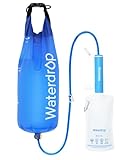
- 5-Stage Efficient Filtration: With adoption of premium-quality 0.1 um ultrafiltration membrane and other raw materials, the Water Filter Straw can effectively reduce harmful substances like chlorine, particulates, sediment, stones, sand, dirt, bad taste &odor in water to ensure the water safety and deliver better drinking experience.
- Professional Combination: Waterdrop Gravity Water Filter Straw with 1.5 gal Gravity-Fed Water Bag is an exclusive water purification combination created for outdoor activities and first aid survival. The large-capacity water bag can hold up to 1.5 Gallons of water at a time, which is about 11 bottles of 500 ml bottled purified water, and can meet the all-day demand for outdoor water drinking.
- Longer Lifespan: The Waterdrop Filter straw can provide safe drinking water up to 1,400 gallons (5,300 liters), and ensures the maximum water flow rate of up to 700 ml/min to provide more relaxed outdoor water drinking experience.
- Recyclable Straw: With innovative backwash purifier function, the inside of the Water Filter Straw can be kept clean at all times and it is recyclable, safe and pollution-free. If the water flow decreases or the filter has been used for a long time, you can remove the mouthpiece, flush it with clean water. (Standard water bag can be used or pop bottle with thread diameter of 27.5mm can be filled clean water for backwashing the filter straw.)
- Versatile Uses: The Water Filter Straw can be connected with water bags or water bottles to filter water for drinking. Both ends of it can be disassembled and connected with the water bags and the water bottles to offer you clean drinking water anytime anywhere.

Last update on 2026-10-22 / Affiliate links / Images from Amazon Product Advertising API
Seasonal And Climate Factors That Affect Your Water Strategy
Your water plan must match your geographic location and climate.
- Wet climates
Rainwater harvesting shines. A modest roof and a few barrels can cover much of your needs part of the year. - Dry climates
Surface water may vanish for months. Wells, deep aquifers, and large storage tanks become more critical. Distillation can help when you have only brackish or salty water. - Hot regions
You need more water per person. Containers in the sun will grow algae and break down faster. - Cold climates
Creeks freeze. Outdoor containers can crack. You may need to bury tanks, insulate pipes, and leave headspace for ice expansion.
Look up your local average rainfall, river flow, and typical summer highs. Then pick which sources to lean on and which are just backups.
Filtering And Purifying Water So It Is Safe To Drink Anywhere
Finding water is only half the job. Making sure it’s potable water keeps you and your family out of the bathroom and the hospital.
There are two key ideas:
- Filtering removes dirt, sand, and many germs.
- Water Purification kills or removes tiny organisms, such as viruses, and some chemicals.
Preppers should have more than one way to treat water. Gear breaks, filters clog, and fuel runs out.
Layered Water Treatment: Why One Method Is Not Enough
Think of water treatment like body armor.
More layers mean better protection.
A simple layered setup:
- Pre-filter
Pour dirty water through a clean cloth, coffee filter, or even a t-shirt folded several times. This removes big chunks and slows clogging in your primary filter. - Main filter
Use a ceramic, carbon, or hollow fiber filter. These remove many bacteria and protozoa, and carbon also improves taste and reduces some chemicals. - Kill step
Boiling, chemical tablets or drops, or UV light finish the job by killing remaining germs and completing water purification.
Example: You scoop muddy pond water that has ducks on it.
- First, pour it through a bandana into a bucket.
- Second, run that water through a gravity filter into a clean container.
- Third, boil the filtered water for at least 1 full minute at low elevations, and 3 minutes at higher elevations.
This layered approach produces safe drinking water and reliable potable water.
Water near farms, factories, or roads can carry fuel, pesticides, and other nasty pollutants.
Distillation might help there, but sometimes the smart move is to skip that source and find better water.
Best Water Filters For Home, Bug Out Bags, And Vehicles
You want filters matched to how and where you will use them.
At home
- Large gravity filters that sit on a counter or table are suitable for daily use. They handle many gallons per day with no electricity.
- Look for units with long-lasting components, easy cleaning, and micron ratings small enough to capture common microbes.
On the move
- Squeeze filters and small pump filters are ideal for hiking or walking to a water source.
- Straw filters are light but harder to use at home, since you need to drink directly from the source or container.
Check if the filter can be backflushed or cleaned, and how many gallons it is rated for.
In vehicles and bug-out bags
- Keep a compact, tough filter that can live in heat and cold.
- Store a small gravity bag or a squeeze setup in your trunk or go-bag.
Test every filter you buy before a real emergency. Run some tap water through it, learn how it connects, and note how fast or slow it works.
Low-Tech Methods: Boiling, Solar Disinfection, And Simple Distillation
If your filter cracks, clogs, or fails, you still have options.
Boiling
- Bring water to a rolling boil for at least 1 minute.
- If you live above about 6,500 feet, go for 3 minutes.
- Let it cool in a covered pot to avoid recontamination.
Boiling kills most germs but does not remove chemicals or heavy metals.
Solar disinfection (SODIS)
- Fill clear plastic or glass bottles with clear water.
- Please place them in direct sunlight for at least 6 hours on a bright day.
- The UV light helps kill germs.
This works best in intense sun with relatively clear water. It is slow but uses no fuel.
Simple distillation
- Distillation turns water into steam and then back into liquid, leaving many contaminants behind.
- A basic setup uses a pot with a lid, gentle heat, and a way to collect condensed steam on the lid into a separate clean container.
- Solar stills can also work in very sunny areas, using plastic sheeting over a pit.
Distillation is suitable for brackish water, some chemical contamination, and even seawater via basic desalination, but it is slow and energy-intensive.
Avoiding Common Water Safety Mistakes That Make You Sick
Many people get sick not because they have no tools, but because they misuse them.
Common mistakes:
- Trusting clear water just because it looks good, ignoring its water quality
- Skipping the kill step after filtering
- Using non-food-grade containers, like old chemical or paint jugs
- Mixing dirty and clean items, such as dipping a dirty cup into a clean water barrel
- Storing treated water in hot garages or in direct sunlight for months
Watch for signs of waterborne illness: diarrhea, stomach cramps, vomiting, fever, and weakness. Dehydration from sickness can be more dangerous than the illness itself.
Keep oral rehydration salts, simple electrolyte powders, and basic medicines in your home kit—a solid first-aid kit pairs well with any water treatment plan.
Transporting And Storing Water Safely In Any Environment
Once you have found and treated water, you still need to move it and guard it.
Spilling half your daily supply on the sidewalk or cracking a storage barrel in winter can hurt more than a short outage.
Start with universal rules:
- Use food-grade containers
- Know that 1 gallon weighs about 8.3 pounds
- Store water in cool, dark, clean places
- Keep a rotation schedule or at least a simple date label
Innovative Ways To Move Heavy Water Without Breaking Yourself
Water is heavy, and backs do not heal fast in a crisis.
Good options:
- 5 to 7-gallon jugs with handles
Big enough to matter, small enough to carry without injury for most adults. - Rolling containers
Some water containers are shaped like carts and can be rolled instead of lifted. Great for older adults or longer pavement hauls. - Hand carts or dollies
Stack jugs or buckets on a cart and strap them in. This is useful in suburbs or cities with sidewalks. - Wheelbarrows
Rural properties can move many gallons at once across rough ground this way. - Gravity and hoses
On rural land, placing large tanks uphill allows you to run water downhill through hoses into smaller containers near your house.
Rural setups might use gravity-fed lines or small solar pumps to move from a pond to a cistern. Suburban preppers might walk short distances from a nearby pond with jugs.
Urban preppers often rely on smaller containers, like 1 to 3-gallon jugs, that can be carried up stairs without too much strain.

- TWO BOTTLES INCLUDED: Includes two bottles, each with 50 Potable Aqua Water Purification Tablets, offering an effective solution for emergency water treatment in camping, hiking, and natural disasters.
- EFFECTIVE WATER PURIFICATION: These water purifier tablets are perfect for camping, hiking, travel, and emergency preparedness; they offer a reliable way to purify water, ensuring safe hydration in any circumstance
- MAKES SOURCES SAFE TO DRINK: Water treatment tablets make water bacteriologically suitable to drink, even in challenging or emergency water situations, ensuring safe hydration when you need it most
- PROTECTION AGAINST HARMFUL ORGANISMS: Our water treatment tablets are effective against Giardia lamblia, providing trusted water purification when used as directed; offers essential protection against harmful pathogens
- VERSATILE EMERGENCY USE: Ideal for hiking, camping, international travel, and disaster preparedness, these portable water treatment tablets provide emergency water purification for any situation

Last update on 2026-10-22 / Affiliate links / Images from Amazon Product Advertising API
Short-Term Water Storage: Jugs, Bottles, And Bathtub Solutions
Short-term water storage covers days to a few months.
Useful tools:
- Store-bought bottled water for grab-and-go use
- Refillable 5-gallon jugs you can rotate every 6 to 12 months
- Collapsible containers that stay flat until you need them
- Bathtub liners or filling the tub when a storm or event is coming (this graywater can serve non-drinking needs like flushing toilets)
Before filling any reusable container, wash it with mild soap, rinse well, then sanitize with a weak bleach solution, and rinse again.
Label each container with a simple date.
A common habit is to rotate stored water every 6 to 12 months, even though sealed water can last longer if stored well.
Aim for at least a 2-week supply of drinking water for everyone in the home, including pets and livestock.
Long-Term Water Storage: Barrels, Tanks, And Underground Options
Long-term water storage covers weeks to years and uses larger containers.
Options include:
- 55-gallon drums
Common and affordable. Please make sure they are food-grade and have never been used to hold chemicals. - Horizontal tanks and IBC totes
These can hold hundreds of gallons. Place them on firm, level ground. - Buried or partially buried cisterns
Soil protects from light and temperature swings. These require more work and sometimes permits, and they work well for rainwater harvesting.
Placement tips:
- Keep tanks out of direct sunlight if possible
- Avoid placing them next to fuel, pesticides, or paint
- Protect them from cars, falling branches, and other impacts
Some people add food-safe water treatments to slow bacterial growth, especially for stored tap water. Others rely on good containers and later re-treat water before drinking.
These long-term systems can also support future recycled water capabilities.
Either way, write down your method and follow it.
Renters and those in small spaces may rely on several smaller containers spread around closets, under beds, or in hidden corners, rather than one giant tank.
Protecting Stored Water From Heat, Light, Freezing, And Contamination
Water does not like extreme conditions.
Key threats and fixes:
- Heat
Speeds up algae growth and plastic breakdown. Store in cool rooms or insulated spaces. - Light
Sunlight feeds algae and can weaken plastic. Use opaque containers or keep them covered. - Freezing
Expanding ice can crack containers. Leave some air space at the top, and insulate tanks in cold climates. - Contamination
Fumes from gasoline, paint, or strong chemicals can permeate some plastics. Keep water away from garages, fuel storage, and chemical shelves.
Quick mental checklist:
- Good places: interior closets, under stairs, basements that stay dry, shaded corners of a room
- Bad places: next to fuel cans, in hot attics, in direct sun on bare pavement
Keep taps, spigots, and hoses clean. Cap all openings when not in use.
Building Your Water Independence Plan For Any Location
Water independence grows over time. You do not have to build a homestead-level system in a weekend.
Your goal is a simple, written plan that covers:
- Your primary and backup sources
- The filters and purification steps you will use
- How will you move water in your setting
- Where and how you will store it
This water plan should sit within your larger family emergency plan, which covers power loss, evacuation, food, and security.
Step-By-Step Water Independence Roadmap For The Next 90 Days
You can make real progress in 3 months.
Month 1: Build your base
- Store at least a 2-week supply of drinking water for your household.
- Buy and test at least one solid water filter.
Tips:
- Rural: Fill a few large drums or tanks with treated water near your home.
- Suburban: Stack 5-gallon jugs in a closet or under beds.
- Urban: Use smaller 1 to 3-gallon containers that you can carry up stairs.
Month 2: Map sources and practice treatment
- Print a local map and mark all possible sources of local water within a few miles.
- Walk or drive to each one at least once.
- Practice collecting water and running it through your whole treatment chain.
Tips:
- Rural: Test drawing from your well without grid power if you have a backup system.
- Suburban: How long does it take to walk to the nearest pond or stream and back with full containers?
- Urban: Practice draining your water heater safely, and test rooftop or balcony rain collection if possible.
Month 3: Upgrade storage and add backups
- Add a second treatment method, such as a backup filter, chemical drops, or a small still.
- Improve long-term water storage by adding extra barrels, improving placement, or adding simple insulation.
- If your climate allows, set up a basic rain catchment system.
Tips:
- Rural: Consider a gravity-fed system from a tank on a small hill.
- Suburban: Add rain barrels on your gutter downspouts.
- Urban: Store extra collapsible containers for fast rain collection on balconies or near windows.
By the end of 90 days, you will have more than the stored water. You will have a working system.
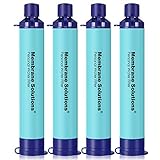
- Drink Anywhere, Certified by Science – This survival-grade straw filter meets strict NSF/ANSI 42, 372, 401 standards (Test Report: NBF21-004693-01). It instantly removes 99.9999% of total coliforms (including E. coli and other representative organisms). It’s designed for extreme reliability during hiking, camping, international travel, or emergency preparedness—proven by science, trusted by adventurers.
- Triple NSF Certified for Complete Reliability & Superior Taste – Breathe easy with every sip. Our straw is independently certified to NSF/42 (for chlorine & taste improvement), NSF/372 (lead-free materials), and NSF/401 (reducing microplastics and particulate). This triple verification guarantees you get the best-tasting water while keeping metals, microplastics and particulate at bay.
- Portable & Long Life-Span – This straw filtration at only 7.1” long and 1″ in diameter fits any 28mm threaded bottle, cup, or glass. It weighs just 2 ounces and fits in the palm of your hand, pocket, gym bag, backpack, survival pack or purse. Both ends of the Upgrade water filter straw are removable for extend Longer Lifespan ensuring it provides up to 1,320 gallons (5,000 liters) of drinking water. Don’t miss this opportunity to drink water conveniently wherever you go.
- 5-Stage Filtration – Our Upgrade 5-Stage Filtration System includes a coarse filter screen, double layer pp cotton fiber, coconut shell activated carbon and hollow fiber ultrafiltration membranes. Flexible use of threaded water inlet cap to easy backflush. (IT DOES NOT LOWER TDS VALUE, ensuring water’s essential mineral balance remains untouched.)
- 0.1 Micron Pore Size & Balanced Flow Rate – This water filter straw features a 0.1 micron pore size, designed to help improve filtration precision. It delivers a flow rate of up to 16.9 fl oz/min (500 ml/min) for a balance between filtration performance and drinking speed, making it suitable for outdoor, travel, and emergency use.
Last update on 2026-10-22 / Affiliate links / Images from Amazon Product Advertising API
Checklists For Rural, Suburban, And Urban Water Independence
Use these as starting points and adapt to your situation.
Rural checklist
- Gear
- Backup pump for your well (hand or solar)
- Large gravity filter or similar home system
- Several 55-gallon drums or larger tanks
- Hoses, fittings, and basic repair tools to maintain water infrastructure
- Skills
- How to draw water if power is out
- How to protect springs and ponds from runoff
- How to run and maintain your filters
- Planning
- Paper map with wells, springs, creeks, and ponds marked
- Written storage and rotation schedule
Suburban checklist
- Gear
- Portable filter set for home and travel
- Several 5 to 7 gallon jugs
- Rain barrels or collapsible tanks, if allowed
- Skills
- How to treat water from ponds and retention basins
- How to carry and cart water safely
- How to shut off your home’s main water line if needed
- Planning
- Neighborhood map with ponds, creeks, and public fountains marked
- List of neighbors who might share water supply, tools, space, or labor; consider planning for recycled water for non-potable outdoor uses
Urban checklist
- Gear
- Compact filters for home, go-bag, and vehicle
- Multiple small containers, 1 to 3 gallons each
- Simple tools to open and drain your water heater safely
- Skills
- How to collect rain from windowsills, balconies, or rooftops
- How to disinfect water in small indoor spaces
- How to move water up stairs without injury
- Planning
- Building-level plan for water if elevators or pumps fail
- Notes on nearby public water features and their risks, including potential wastewater contamination
Print your checklist, review it every few months, and update it as your gear and skills grow.
Testing, Drills, And Family Training So Your Plan Works Under Stress
A plan you never test is a wish, not a system.
Run simple drills:
- Pick a weekend when you use only stored or self-sourced water. Turn off your main supply if you can do so safely.
- Have each family member practice using the primary filter from start to finish.
- Teach safe lifting and carrying of heavy containers.
- How long does it take to fetch water from each backup source?
You can combine water drills with power outage practice or bug-out exercises.
When everyone in the house understands where the water comes from and how to make it safe, you remove panic from the equation.

- 3-in-1 Innovative Water Filtration System Survival – BK3000 water filter supports electric and hand pump modes as well as solar charging. The solar electric water filter features dual 0.01-micron ultrafiltration membranes and a 6-stage water purification system composed of PP cotton, KDF, activated carbon, and coconut activated carbon fibers. Effectively improve water taste and quality. It has a better filtration effect than other water filters. Certified by SGS, FCC, and UL.
- Easy-to-Use Water Filter Camping – Simply press a button to get clean water in rivers, lakes, streams and most water sources. With a maximum flow rate of 800~1000 ml/min, it can filter up to 240,000 ml per charge. In the process of automatic water dispensing, free your hands and you can handle other things. If the camping water filter runs out of power, with the upgraded hand pump, you can still get clean water by hand pressing. This is beyond the reach of other electric water purifiers.
- Lightweight and Portable Water Filter for Outdoor Adventures – The water purifier survival weighs only 450 grams (0.99 pounds), making it easy to carry. The included storage case can store all accessories and can be attached to a backpack for quick and easy access. Travel water filter is an essential gear for emergency water needs such as camping, hiking, survival, backpacking, hurricane, hunting, fishing, domestic and foreign travel, emergency preparedness, rainstorms, earthquakes and floods.
- Two Ways Of Charging for Convenience – The hiking water filter is equipped with a solar panel, which supports solar charging in addition to the traditional Type-C charging. When there is no electricity in extreme outdoor conditions, the water filter survival can be charged by sunlight. This is very convenient and practical. The backpacking water filter is a great choice for survival gear and supplies to be prepared for any situation. (Notice: When the first four indicator lights are all on, it means it is fully charged, and the last indicator light represents the solar charging status.)
- Comprehensive Emergency Survival Kit – The BK-3000 solar water filter is designed for survival and includes essential features such as a 4-in-1 charging cable, LED lighting, SOS light and reverse charging of mobile devices. The emergency water filter can charge your mobile phone. The 4-in-1 charging cable meets all charging interfaces. Emergency light allows you to provide lighting at night and filter water outdoors easily.
Last update on 2026-10-23 / Affiliate links / Images from Amazon Product Advertising API
Our Conclusion
True Water Independence For Any Location comes from layers ready to meet your water demand, not from any single gadget.
You map your sources, stack multiple treatment methods, learn how to move heavy water without injury, and store it where heat, light, and pollution cannot reach it.
You do not have to do everything this week.
Small, steady steps, like buying a filter, filling a few jugs, or mapping a local pond, move you far ahead of almost everyone around you.
Pick one task from this guide and finish it in the next seven days.
Then pick the next. As you build your water plan and tie it into your wider emergency planning, you will know, deep down, that your family will not go thirsty when the tap runs dry.





3 Comments